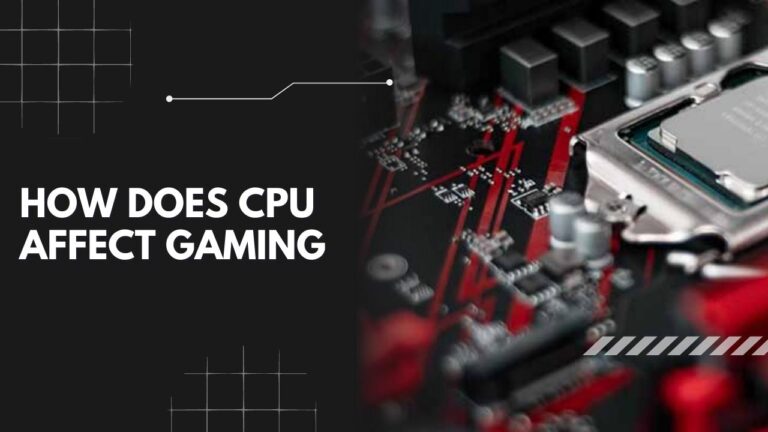
Understanding how your CPU impacts gaming is crucial for every US gamer looking to maximize performance and value. This comprehensive guide, tailored for busy adults balancing life with their passion for gaming, demystifies the role of the Central Processing Unit in achieving smooth frame rates, faster load times, and a more responsive gaming experience. We delve into core counts, clock speeds, and architectural differences, explaining how these factors contribute to in-game fluidity, especially in demanding titles or when multitasking like streaming. Discover practical tips for identifying CPU bottlenecks, making smart upgrade decisions on a budget, and optimizing your current setup without falling for marketing hype. Learn to make informed choices that enhance your relaxation and fun without compromising your valuable time or wallet. Whether you are a casual player enjoying social games or a competitive enthusiast, this article provides actionable insights to ensure your gaming sessions are as seamless and enjoyable as possible, keeping you current with 2026 trends without breaking the bank.
Related games- 10 Pro Tips for Mastering Roblox Studio in the USA
- GTA III Review: Unpacking Liberty City's Legacy Now
What exactly does a CPU do for my gaming experience
Your CPU, the Central Processing Unit, is essentially the brain of your gaming PC. While the GPU handles the graphics, the CPU is responsible for all the behind-the-scenes calculations that make a game playable. This includes processing game logic, managing AI behaviors for enemies and NPCs, handling physics simulations, controlling player inputs, and preparing frames for your GPU to render. A powerful CPU ensures that all these complex tasks are processed quickly and efficiently, preventing bottlenecks that can lead to choppy gameplay, stuttering, and slow loading times, even if you have a top-tier graphics card.
How do CPU cores and clock speed affect game performance
CPU cores are like individual mini-processors within your main CPU, allowing it to handle multiple tasks simultaneously. Clock speed, measured in gigahertz GHz, determines how many cycles per second each core can perform. For gaming, both are important but their impact varies. Older games often relied heavily on single-core performance, meaning higher clock speeds were paramount. Modern games, especially those released in 2024-2026, are increasingly optimized to utilize multiple cores, benefiting from CPUs with 6 to 8 cores or more. A good balance provides both strong single-core speed for responsiveness and sufficient cores for complex game environments and multitasking like streaming.
Can my CPU bottleneck my GPU, and how do I know if it is
Yes, your CPU can absolutely bottleneck your GPU. A CPU bottleneck occurs when your processor cant keep up with the data your graphics card is ready to process. The GPU ends up waiting for the CPU, leading to lower-than-expected frame rates and reduced GPU utilization. You can often detect a CPU bottleneck by monitoring your system resources using tools like MSI Afterburner or HWMonitor. If your GPU usage is consistently below 99% while your CPU usage is high 80-100%, especially in demanding game scenarios, youre likely experiencing a CPU bottleneck. This means your graphics card isn't being fully utilized.
What CPU features are most important for modern gaming in 2026
In 2026, for modern gaming, the most important CPU features include a healthy number of cores 6-8 physical cores are a sweet spot, high boost clock speeds for excellent single-thread performance, and efficient multi-threading capabilities. Look for CPUs with robust cache memory as this speeds up data access for the cores. Additionally, platform features like PCIe 5.0 support for future GPUs and NVMe SSDs, along with DDR5 RAM compatibility, are crucial for a well-rounded and future-proof gaming system. These ensure your CPU can efficiently communicate with other vital components.
Should I prioritize CPU or GPU for a gaming PC upgrade on a budget
For most gaming scenarios, especially if you're on a budget, the GPU generally has a more direct and noticeable impact on in-game visual quality and raw frame rates. However, neglecting your CPU can lead to severe bottlenecks, rendering a powerful GPU ineffective. A good rule of thumb is to aim for a balanced system. If your current CPU is more than 5-6 years old or struggles to maintain 60 FPS in many titles, an upgrade might be necessary before a new GPU. For current systems, prioritize upgrading the component that is consistently hitting 99% usage and limiting the other, typically the GPU first if your CPU is relatively recent mid-range or better.
How does CPU affect streaming and multitasking while gaming
When you stream or multitask while gaming, your CPU takes on a much heavier workload. Gaming itself is CPU-intensive, but adding tasks like encoding video for a live stream, running Discord for voice chat, having multiple browser tabs open, or even using a webcam requires significant processing power. A CPU with a higher core and thread count, such as an 8-core/16-thread or 12-core/24-thread processor, will handle these concurrent demands far more gracefully than a 4-core or 6-core chip. This prevents dips in game performance and ensures your stream quality remains high, offering a smoother experience for both you and your viewers.
Are integrated graphics CPUs good enough for casual gaming or older titles
Integrated graphics CPUs, often labeled with suffixes like G or having Intel Xe Graphics, have come a long way and are surprisingly capable for casual gaming or playing older titles. They are excellent for budget builds, mini PCs, or systems where a dedicated GPU isn't a priority or feasible. You can comfortably enjoy many indie games, esports titles like Valorant or League of Legends at lower settings, and classic PC games at playable frame rates. However, for demanding AAA titles or competitive gaming where high frame rates and graphics settings are crucial, a dedicated graphics card paired with a capable CPU is still essential. They offer a great starting point for gamers.
Ah, the eternal quest for that buttery-smooth gameplay! We've all been there: you finally get a moment to unwind after a long day, fire up your favorite game, and then... stuttering, slow loading screens, or frames that just refuse to hit that glorious 60+ mark. It's frustrating, especially for us adult gamers who juggle jobs, families, and life's endless responsibilities. When your precious gaming time is limited, you want it to be perfect, a true escape. You might blame the internet, or maybe even your aging graphics card, but often, the silent hero (or villain) behind your gaming performance is something else entirely: your Central Processing Unit, or CPU. Understanding how CPU affect gaming is not just for tech gurus; it's essential for anyone who wants to optimize their fun, get value for their money, and stay current without falling for the latest marketing hype.
In 2026, with game worlds becoming more intricate, AI more complex, and social gaming experiences like cross-play on Discord more integrated, your CPU plays a more critical role than ever. Recent US gaming statistics show that 87% of gamers play regularly, often dedicating 10+ hours a week, and a significant portion of that time is spent socializing or building skills. Whether you're diving into a new cozy game with friends, grinding competitive esports, or exploring vast open worlds, your CPU is orchestrating everything. This guide is built to cut through the noise, providing practical, no-nonsense advice for how your processor truly influences your gaming experience, helping you troubleshoot common issues, make smart upgrade decisions, and ensure your limited gaming time is always top-tier.
What exactly does a CPU do for my gaming experience
Your CPU, the Central Processing Unit, is essentially the brain of your gaming PC. While your graphics card (GPU) handles the visual rendering, the CPU is responsible for all the complex, behind-the-scenes calculations that make a game playable and responsive. Think of it this way: the GPU paints the picture, but the CPU decides what goes into that picture and where. This includes processing game logic, managing AI behaviors for enemies and NPCs, handling physics simulations like explosions or environmental interactions, controlling player inputs, and coordinating data between all your other components. It’s also preparing the frames that your GPU will ultimately render and display on your screen. A powerful CPU ensures that all these complex tasks are processed quickly and efficiently, preventing bottlenecks that can lead to choppy gameplay, stuttering, and agonizingly slow loading times, even if you have a top-tier graphics card. This direct impact on frame stability and overall responsiveness highlights how CPU affect gaming at its core.
How do CPU cores and clock speed affect game performance
CPU cores are like individual mini-processors within your main CPU, allowing it to handle multiple tasks simultaneously. Clock speed, measured in gigahertz (GHz), determines how many cycles per second each core can perform. For gaming, both are important, but their impact varies significantly based on the game. Older titles or those not heavily optimized for multi-threading often relied more on single-core performance, meaning a higher clock speed on fewer cores was often king. However, modern games, especially those released between 2024 and 2026, are increasingly designed to utilize multiple cores effectively. This means games with complex open worlds, numerous AI characters, or sophisticated physics engines, like the latest AAA releases, truly benefit from CPUs with 6 to 8 cores or even more. A strong balance, providing both high single-core speeds for responsiveness and sufficient multi-core performance for complex game environments and simultaneous tasks like streaming, is ideal for todays gamer. This evolution clearly demonstrates how CPU affect gaming is shifting from pure clock speed to core count utilization.
Can my CPU bottleneck my GPU, and how do I know if it is
Yes, absolutely. A CPU can be the weakest link in your gaming chain, causing what’s known as a CPU bottleneck. This happens when your processor can't keep up with the data your graphics card is ready to process. Imagine your GPU is a high-speed train, but your CPU is a tiny station that can only load passengers slowly; the train ends up waiting, and you don't reach your destination (high frame rates) as fast as you should. The GPU ends up waiting for the CPU, leading to lower-than-expected frame rates and reduced GPU utilization. This can be incredibly frustrating if you've invested heavily in a powerful graphics card only to find your game isn't performing as expected.
You can often detect a CPU bottleneck by monitoring your system resources. Tools like MSI Afterburner, HWMonitor, or even the built-in Task Manager can help. Launch your game, open the monitoring tool, and pay close attention to your GPU and CPU usage percentages. If your GPU usage is consistently below 99% (e.g., 60-80%) while your CPU usage is high (e.g., 80-100%), especially in demanding game scenarios or crowded multiplayer maps, you're very likely experiencing a CPU bottleneck. This indicates your graphics card isn't being fully utilized because the CPU can't feed it data fast enough. This real-time diagnostic is key to understanding how CPU affect gaming specifically in your setup.
What CPU features are most important for modern gaming in 2026
For modern gaming in 2026, the landscape has evolved significantly. The most important CPU features now include:
- A healthy number of cores: 6 to 8 physical cores are generally considered the sweet spot for a balanced gaming rig, offering excellent performance across most titles and good headroom for multitasking. For serious streamers or content creators, 10-12+ cores can be beneficial.
- High boost clock speeds: Even with multi-core optimization, strong single-thread performance (driven by high boost clocks) remains crucial for game responsiveness and maintaining maximum frame rates in many titles.
- Efficient multi-threading capabilities: Features like Intel's Hyper-Threading or AMD's Simultaneous Multi-threading (SMT) effectively double the logical threads, allowing each core to handle more instructions concurrently, improving performance in multi-threaded workloads.
- Robust cache memory: A larger L2 and L3 cache speeds up data access for the CPU cores, reducing latency and boosting overall performance.
- Platform features: Look for support for modern standards like PCIe 5.0 for future-proofed GPU and NVMe SSD bandwidth, and compatibility with fast DDR5 RAM. These ensure your CPU can efficiently communicate with other vital components and won't be held back by older technologies. These collective features highlight the intricate ways how CPU affect gaming performance in an advanced ecosystem.
Should I prioritize CPU or GPU for a gaming PC upgrade on a budget
This is a classic dilemma for many gamers, especially those balancing gaming with life's other demands and working with a budget. For most gaming scenarios, the GPU (graphics card) generally has a more direct and noticeable impact on in-game visual quality and raw frame rates. If you want higher resolutions, better textures, and more visually stunning worlds, a stronger GPU is usually the answer. However, as we've discussed, neglecting your CPU can lead to severe bottlenecks, making even a powerful GPU perform poorly.
A good rule of thumb is to aim for a balanced system. Start by assessing your current PC:
- If your CPU is more than 5-6 years old (e.g., a 4th-gen Intel Core i5 or an older Ryzen 1000 series) and you notice consistent stuttering or low frame rates in many titles, even at lower settings, a CPU upgrade is likely your first priority. You might need a new motherboard and RAM too, making it a bigger investment.
- If your CPU is relatively recent (say, a 6-core Intel i5/i7 or Ryzen 5/7 from the last 3-4 years) and you're mostly seeing performance drops when increasing resolution or graphical settings, then a GPU upgrade will probably give you the most bang for your buck.
How does CPU affect streaming and multitasking while gaming
For the social gamer, the content creator, or simply someone who likes to juggle multiple apps, your CPU takes on a much heavier workload. Gaming itself is CPU-intensive, but adding tasks like encoding video for a live stream to Twitch or YouTube, running Discord for seamless voice chat with friends (a trend 87% of US gamers participate in regularly), having multiple browser tabs open, or even using a webcam requires significant additional processing power. Your CPU has to manage all these programs concurrently without letting any of them hog too many resources from the game itself.
A CPU with a higher core and thread count, such as an 8-core/16-thread or 12-core/24-thread processor, will handle these concurrent demands far more gracefully than a 4-core or 6-core chip. More cores mean the CPU can dedicate specific resources to different tasks – one set for the game, another for the streaming software, another for Discord. This prevents dips in game performance and ensures your stream quality remains high and your voice chat fluid, offering a smoother experience for both you and your viewers. If you're into esports viewing or contributing to the creator economy, a robust CPU is non-negotiable, directly illustrating how CPU affect gaming beyond just in-game frame rates.
Are integrated graphics CPUs good enough for casual gaming or older titles
Integrated graphics CPUs (iGPUs), often found in processors with suffixes like 'G' for AMD Ryzen or Intel chips featuring 'Xe Graphics,' have made incredible strides in recent years. They are no longer just for basic office tasks! For budget builds, compact mini PCs, or systems where a dedicated GPU isn't a priority or simply isn't in the budget, iGPUs are surprisingly capable. You can comfortably enjoy many indie games, popular esports titles like Valorant, League of Legends, or Counter-Strike 2 at lower to medium settings, and classic PC games at perfectly playable frame rates.
However, it's crucial to manage expectations. While they're fantastic for casual unwinding and building skills in less demanding titles, for the latest demanding AAA games, high-refresh-rate competitive gaming, or VR experiments (a growing trend!), a dedicated graphics card paired with a capable CPU is still absolutely essential. Integrated graphics offer a great starting point for many busy gamers who want to enjoy some digital relaxation without a massive initial investment, proving that even entry-level options influence how CPU affect gaming accessibility.
Optimizing Your Current Setup: Beyond Just Hardware
Even if a new CPU isn't in the cards right now, there are still ways to optimize your current setup to get the most out of your existing processor. These tips focus on reducing unnecessary CPU load, allowing your games to breathe:
- Update Drivers: Always keep your CPU chipset drivers, GPU drivers, and BIOS up-to-date. Manufacturers frequently release optimizations that can boost performance.
- Close Background Applications: Before launching a demanding game, close unnecessary programs like web browsers with dozens of tabs, messaging apps, or cloud syncing services. Every little bit of CPU usage adds up.
- Manage Startup Programs: Use Task Manager (Windows) to disable programs that automatically launch with your PC but aren't immediately needed for gaming.
- In-Game Settings: Experiment with CPU-intensive settings like AI density, draw distance, complex physics, and shadow quality. Reducing these can often alleviate CPU strain without a massive visual downgrade.
- Check for Malware: Malicious software can hog CPU resources. Regularly run scans with reputable antivirus software.
- Thermal Management: An overheating CPU will throttle its performance to prevent damage. Ensure your CPU cooler is clean and properly installed, and consider better case airflow.
What About Future-Proofing My CPU for 2026 and Beyond
For the discerning gamer, making smart upgrade choices means considering longevity. In 2026, with game developers pushing boundaries, investing in a CPU that will remain relevant for the next 3-5 years is a wise move. Look for processors that offer:
- Higher Core/Thread Counts: Aim for at least 8 cores and 16 threads if your budget allows. As games become more parallelized, these extra threads will be utilized more efficiently.
- Latest Platform Support: CPUs that support PCIe 5.0 and DDR5 RAM will ensure you can take advantage of the fastest GPUs and SSDs as they become more mainstream and affordable. This provides better upgrade paths down the line.
- Strong Single-Core Performance: While multi-core is growing, single-core speed still matters for many gaming engines and general system responsiveness.
- Reputable Brands: Stick with Intel Core i5/i7/i9 or AMD Ryzen 5/7/9 processors. Both companies offer excellent choices, but monitor tech reviews for their latest generations.
Conclusion
So, there you have it. Your CPU isn't just some background component; it's a vital engine that profoundly shapes how CPU affect gaming performance, from frame rates and loading times to multitasking capabilities and future upgrade paths. For us busy gamers, understanding its role means we can troubleshoot better, spend our hard-earned money smarter on upgrades, and ultimately, get more enjoyment out of our limited but cherished gaming sessions. Whether you're chasing high frames in the latest esports title or just relaxing with friends in a cozy new release, a well-matched and optimized CPU is your ticket to a smoother, more immersive experience. Don't let a bottleneck spoil your fun!
What's your biggest gaming challenge when it comes to performance or hardware? Comment below!
FAQ Section: Your Quick Answers
Q: How often should I upgrade my CPU for gaming
A: Generally, a modern gaming CPU should last 4-6 years before needing an upgrade. The need often depends on new game requirements and whether your current CPU is bottlenecking your GPU. Monitor performance to decide.
Q: Does CPU brand (Intel vs AMD) matter for gaming
A: Both Intel and AMD offer excellent gaming CPUs. Performance leadership can shift with new generations. Focus on specific model performance benchmarks for your budget rather than brand loyalty, as both provide competitive options in 2026.
Q: Can a better CPU improve my internet connection or ping in games
A: No, your CPU does not directly improve internet connection speed or ping. Those are dependent on your ISP, network hardware, and game server location. However, a strong CPU can process network data more efficiently, reducing potential lag from your PC's side.
Q: Is it worth overclocking my CPU for gaming
A: Overclocking can provide a small performance boost (5-15% typically) in some CPU-intensive games. However, it requires a compatible CPU (unlocked), a good motherboard, and an excellent cooler. For most busy gamers, the slight gain might not be worth the added heat, power consumption, or potential system instability.
Q: What is a CPU cache and why is it important for gaming
A: CPU cache is a small, very fast memory on the CPU chip that stores frequently accessed data, reducing the need to fetch it from slower RAM. For gaming, a larger and faster cache means the CPU can access game instructions and data quicker, leading to smoother frame delivery and better overall responsiveness.
Q: Do older games benefit from powerful modern CPUs
A: Older games, especially those designed for fewer CPU cores, may not fully utilize the multi-core power of modern CPUs. However, they will still benefit from the high single-core performance and improved instruction sets of newer processors, often running at extremely high frame rates with ease.
CPU is vital for game logic, AI, physics, and frame rate stability. A strong CPU prevents GPU bottlenecks, ensuring smoother gameplay and faster load times. Multitasking like streaming requires more CPU cores. Balancing CPU and GPU is key for budget-friendly upgrades. Modern games benefit from higher core counts and clock speeds. Optimization involves updating drivers, managing background tasks, and tweaking in-game settings. Consider future-proofing for new titles and social gaming trends.
35

Best Gaming CPU 2026 GMDegens Io Best Gaming Cpu . Best Gaming CPU 2026 Ryzen 7 9800X3D Vs 9600X Vs Intel Best Gaming Cpu 2026 768x432 . Best CPU For Gaming 2026 Top Gaming Processor The Best CPU For Gaming In 2026 01 . How Much Does A CPU Affect Gaming DesktopEdge How Much Does A Cpu Affect Gaming 820 2 . How RAM SSD Shortages Could Affect Computer Prices In 2026 Shopinverse Why Computers May Cost More In 2026 Ram Ssd Shortage Explained 8663111

Best Gaming Laptop With Thunderbolt 4 For 2025 Does Cpu Affect Laptop Speed.webp. Hacksaw Gaming CEO Shares California Sweepstakes Exit Plans How Will 2026 Affect Sweeps Casinos Gaming Attorney 1024x683 . 10 Much Awaited Games Set To Launch In 2026 Games To Launch 2026 1536x967 . LGA 2066 CPU List 2026 Complete Processor Guide Best CPU For RTX 3070 . Best Gaming Processor 2026 AMD Vs Intel Comparison Complete Guide Cpu Gaming Intel




2026 CPU Launches AMD Intel NVIDIA Buy Now Or Wait YouTube . Do CPU Cores Affect Gaming Performance YouTube . What S The Best CPU For Gaming 2025 The Definitive Guide YouTube . Best Gaming Laptops At CES 2026 RTX 5090 Options Dual Screen Picks Lenovo Legion Pro Rollable Concept. Best Affordable Gaming CPU 2026 Expert Reviews Of 8 Budget Processors Featured Image T5bt49ae




Top 10 Most Anticipated Games Of 2026 What To Watch Out For TVN GAMES IN 2026 . Best Gaming PC Builds For 2026 Best Gaming PC Builds For 2026.webp. Intel CPU Free Gift Bonanza Extended To Current Gen Ultra Series Get 1200 80 . Best Gaming Intel CPU 2026 8 Models Tested Compared Featured Image T5c 8utg . Best Budget Gaming CPU 2026 Top Picks Under 200 Switchblade Gaming Best Budget Gaming Cpu 2026.webp


The 9 Best Budget CPUs For Gaming In 2026 Reviewed Ranked How To Determine If Your CPU Can Handle Specific Games 1024x576 . TESTED Best CPU For Gaming In 2026 YouTube . How Does CPU Affect Gaming Robots Net How Does Cpu Affect Gaming 1690420245 . How GPU Performance Affects Gaming Computer Hardware Hub Cpu Clock Speed Impacts Gaming Performance 23.webp. How Does CPU Affect Gaming Robots Net How Important Is A Cpu For Gaming 1690420337

Best AMD Ryzen APU In 2026 Our Top Picks PC Guide Samsung TV Remote Codes Featured Image 29 . How Does CPU Affect Gaming Everything You Need To Know CPU Affect Gaming 768x432 . How GPU Performance Affects Gaming Computer Hardware Hub Impact Cpu Multi Threading Gaming Performance 75.webp. CES 2026 Roundup All The Biggest Tech. How GPU Performance Affects Gaming Computer Hardware Hub Cpu Power Consumption Affects Your Systems Performance 50.webp



Best CPU GPU Combos For Gaming PC Builds In 2026 ALL BUDGETS . How CPU Cores And Threads Affect System And Guide Cpu Cores Threads Gaming 16.webp. Best CPU For Gaming Budget 2026 Top 10 Budget Gaming Processors Best CPU For Gaming Budget . Does RAM Speed MHz Affect Gaming FPS July 2026 Guide Does RAM Speed MHz Affect Gaming FPS . How Cpu Effect Gaming At Miguel Campbell Blog Does CPU GHz Matter For Gaming 1